ONLINE PORTFOLIO
Opportunities
Welcome to our "Opportunities" page, your gateway to unlocking potential avenues for innovation and impact. Here, we present our "How might we" questions, carefully crafted based on insights derived from our frameworks and models. These questions are tailored to address the needs of both our people group and stakeholders within the real estate agent community. By posing these questions, we aim to gain a deeper understanding of where interventions are needed within our system, guiding the creation of products and ideas that truly resonate with our audience.
How might we's (HMW's)
How might we statements are relevant questions to ask that will lead a designer closer to the solution of the problem that affect the system it is impacting in a positive way. In our case, our how might we statements have evolved over time. In the left are what questions we were originally asking before our insights step. These questions were originally asked with little evidence. The revised questions on the right are the questions we came up with after reviewing our evidence.
Original HMW
1
How might we better establish trust
2
How might we establish stability in the agents
3
How might we provide more value clients

Revised HMW
4
How might we attract more clients or business to agents
5
How might we secure more real estate transactions and closings
6
How might we provide value to vital stakeholders of the system
HMW evidence:
HMW 4:
-
Josh and Gloria expressed that buyers were frequently incorrect with their data and facts and it would cause delays or cause the sale to fail completely. Patricia expressed a similar sentiment in that her clients were often international and while their facts were straight, they required a lot of “hand holding” to get through the process.
HMW 5:
-
Across the board there was a desire to be able to save time in the process in some way or another. There were also complaints from Maria specifically about another agent who had mismanaged a deal and caused a sale to fall through.
HMW 6:
-
Our interview with Gloria indicated that there is room for improvement in satisfaction for the vital stakeholders of the transaction. She is dedicated to her work, so much so that she works long hours, much like the other agents we interviewed. She measures her success by the satisfaction of her clients, like others that we interviewed. She loves what she does, and she is good at her work, but she is left tired by the time commitment. If we could assist in increasing the effectiveness of showings, of fact finding, of contract drafting, of trust both ways, we would be able to affect the overall satisfaction of clients, agents, lawyers, and coordinators.
MODELS
In Human centered and systems-minded design, there is exists an idea of models. Models are techniques to understand the stakeholders and components that makes a system function. In our case, we are creating models to understand the stakeholders for Real estate.
Power interest table

Why Did We Make This?
Our Power-Interest Matrix categorizes our sixteen stakeholder groups based on their influence and interest in our solution-making process. Stakeholders with minimal influence and low interest are monitored (bottom left), while those with minimal influence but high interest are kept informed (bottom right). Significant influencers with low interest are noted (top left), while stakeholders with both influence and interest are actively engaged (top right).
How Did We Make This?
As we assessed each group, their proximity to the problems and their impact on the finances of agents and clients were key factors in determining their power. Those with greater influence over transactions received higher power ratings. For interest, we identified previously overlooked stakeholders like neighbors, school districts, churches, and police departments, prioritizing those closer to the solution and those with more interactions with agents or clients.
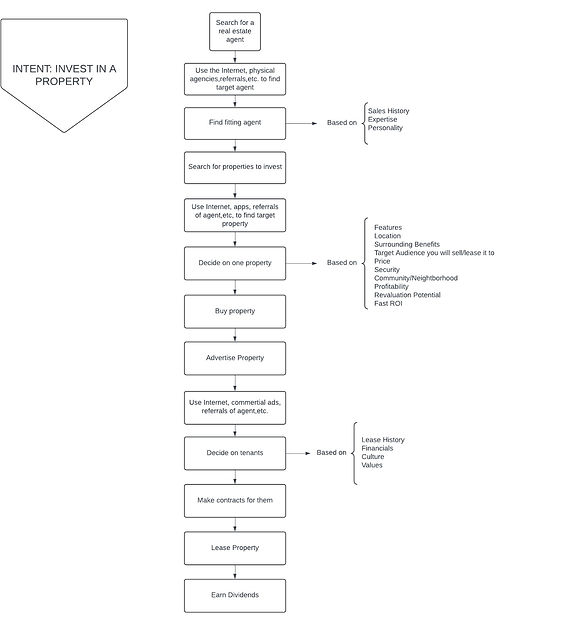
Sequence model
How Did We Make This?
A sequence model consists of steps for a certain action or goal to be completed. In our case, the model applies the steps to invest in a property in the point of view of a client.
Why Did We Make This?
We made this to help us to come up with ideas for the final ideas to aid our stakeholders. This model was very helpful because it helped us identify the steps of the process of investing in our property and helped understand our stakeholders better.
Want to learn more about this model?
Value Network

How Did We Make This?
The value network is a model that explains the value that certain stakeholders have in the overall system. This model is in the context of high-end real estate. It demonstrates the interaction between stakeholders under the context of a client looking to invest in a property.
Why Did We Make This?
The purpose of making this model is to figure out the different kinds of influences that our stakeholders have with each other. This way, we may further understand our people group and come up with more high quality ideas.